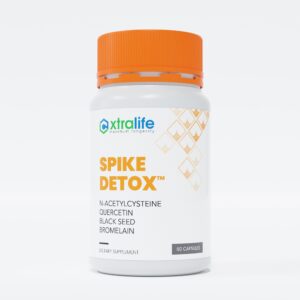
Spike Detox – One Bottle – 60 pill
Original price was: $74.75.$68.94Current price is: $68.94. inc GST1 bottle of 60 pills.


Following controversy over COVID‑19 messaging, several US states introduced laws preventing medical boards from disciplining doctors solely for expressing viewpoints that diverge from government or public‑health authorities. These reforms emerged partly in response to California’s AB 2098, which attempted to classify dissenting COVID‑19 advice as “misinformation.” AB 2098 was later repealed in 2024 after courts found it unconstitutionally vague under the Fourteenth Amendment.
These reforms collectively establish a separation of medicine and state, ensuring public health policy cannot be shaped by commercial incentives or foreign technocratic bodies.
Kory v. Bonta is now central to the American medical‑speech landscape. The plaintiffs—Dr Pierre Kory, Dr Le Trinh Hoang, Dr Brian Tyson, Physicians for Informed Consent, and Children’s Health Defense—challenged California’s authority to discipline physicians for COVID‑19‑related speech under Business & Professions Code §2234.
The case reached the US Supreme Court (Docket 24‑932), where petitioners argued that disciplining physicians for dissenting COVID‑19 advice violates the First Amendment. The petition was ultimately denied in April 2026, but the filings and briefs show the national significance of the issue and the growing legal movement to protect medical speech.

While the United States moved toward protecting medical freedom of speech, New Zealand took a very different path. During the COVID‑19 period, several doctors who questioned official guidance were investigated by the Medical Council of New Zealand, faced disciplinary hearings, and in some cases lost their practising certificates. Court action became a primary tool for enforcing compliance, and mainstream media often portrayed dissenting clinicians — including members of NZDSOS — as fringe or unsafe rather than part of a legitimate scientific debate.
At the same time, the wider science environment was under strain. Major international agencies were facing criticism for commercial influence, academic institutions were accused of gatekeeping dissent, medical journals were warning about rising scientific fraud, and some pharmaceutical companies involved had well‑documented histories of regulatory breaches. All of this created a climate where official messaging could not always be assumed to represent the safest or most balanced public‑health position.
Two Different Approaches to Governance
This produced a very different style of governance. In the US, the legal system was used to limit regulatory overreach and defend clinical independence. In New Zealand, the legal system was used to enforce regulatory authority and restrict dissent. The contrast highlights two models of health governance: one that protects open scientific discussion, and one that treats disagreement as a disciplinary matter. It raises important questions about how New Zealand wants to balance public‑health messaging with clinical independence in the future — and how far state authority can stretch before public trust begins to fracture.
While other countries made room for genuine medical exemptions, New Zealand kept the gate almost completely shut — even as cracks appeared in the global science environment. Many countries were already acknowledging vaccine injuries and offering compensation, while New Zealand continued with “safe and effective” messaging and provided few avenues for doctors to formally connect adverse reactions with the products involved. New Zealand ended up one of the least responsive communities in the world to emerging evidence.
In a future crisis, this rigidity leaves New Zealand open to information pollution — the subtle drift where risky drugs are talked up, and the dangers of experimental ones quietly fade from view.
The BMJ warns that doctors globally face increasing punitive scrutiny for public expression, and that freedom of speech for clinicians must be protected to maintain trust and transparency.
International commentary highlights a worldwide contraction of free speech, including within healthcare. The BMJ notes widening gaps between formal protections and actual practice, with politically sensitive speech increasingly scrutinised.
This global trend underscores the importance of structural reforms that protect clinician autonomy, patient rights, and transparent governance.

New Zealand’s public‑health decision‑making relies heavily on imported frameworks from:
and on industry‑produced data packages that shape Medsafe and Ministry of Health guidance. This means our “independent” advice is often downstream from global information streams that may be commercially corrupted by fraudulent or conflicted actors upstream.
If New Zealand were to continue with this restrictive model — using legal and regulatory pressure to enforce acceptance of potentially incomplete scientific information, silencing dissent, and limiting medical freedom of speech — the country faces several risks:
• Reduced national sovereignty over health policy
• Reduced personal sovereignty over treatment choices
• Weak protection for pluralistic clinical advice
• Insufficient independent scientific review
• Opaque conflict‑of‑interest structures
• Emergency powers vulnerable to external triggers
• Insufficient protection for indigenous & traditional health pathways
• Erosion of public trust and social cohesion
• Reduced resilience and economic stability in future crises
Overall poorer health outcomes driving higher health burden and weakening economic resilience.
Drawing from US precedents, New Zealand could establish a modernised legislative framework protecting:
This page forms part of a multi‑jurisdictional series (US, AUS, EU) intended to support informed policy conversation in New Zealand as new safeguards are discussed, establishing:
:
This is the foundation for a sovereign, transparent, evidence based health governance model.
Xtralife Health Science supports people who choose natural health pathways. Since 2020, we’ve developed formulas that work with the body’s own systems of balance and repair. We see society as a living body — a community of cells — strongest when each part is supported. We don’t argue about how harm enters the body; we focus on helping it return to strength. Likewise, our policy work aims to support the social body, strengthening cohesion and resilience so communities can function as a healthy whole.
1 bottle of 60 pills.

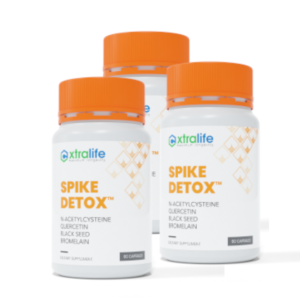
3 bottles of
These are premium quality products.
If you need extra help staying well, but these prices are outside what you can afford, please contact us.